
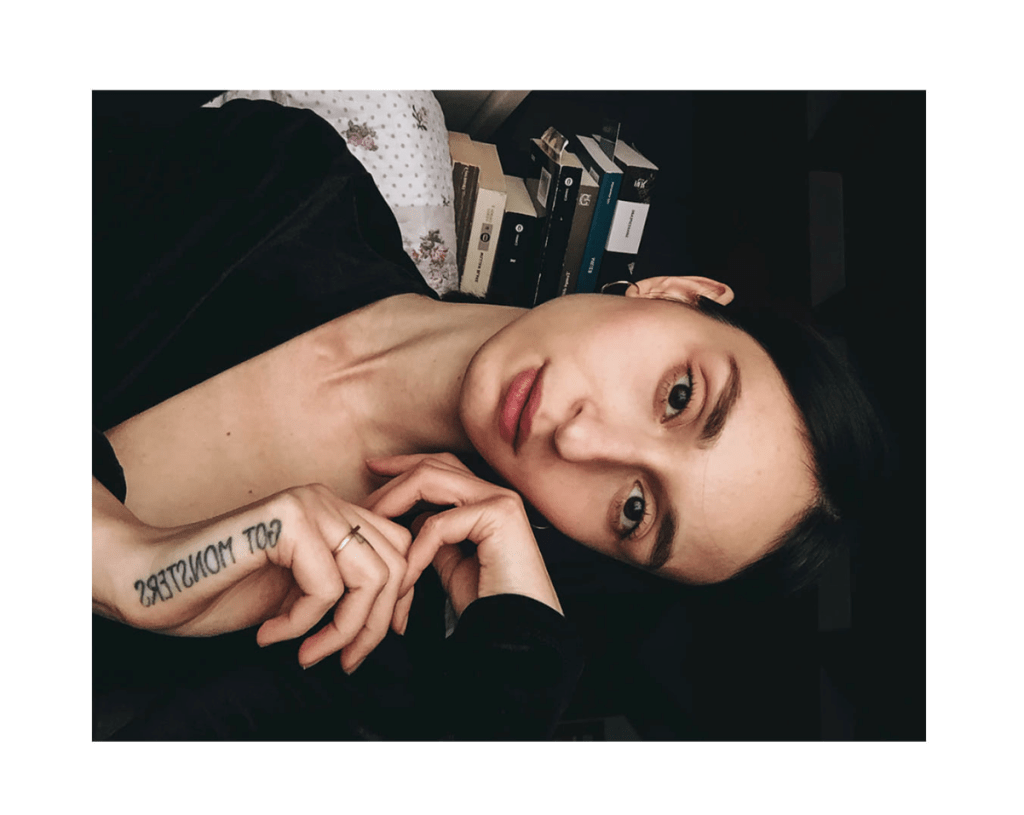
After Martina took some tremendous portraits of me, I was eager to get to know her and her work a bit better. She willingly agreed to be interviewed…Anglophones, scroll down for the EN translation!

1) Martina, dicci qualcosa di te e del tuo background / percorso artistico.
Sono un artista fotografa. Sono nata a Parma, dove (legata al disegno e alla pittura fin da bambina) ho cominciato i miei studi al Liceo Artistico, per poi proseguire il mio percorso all’Accademia di Belle arti Bologna. L’interesse verso la storia dell’arte e la costante ricerca artistica personale, mi hanno spinto ad esprimermi attraverso diversi media nel corso degli anni: dalla grafite alla fotografia, nata dall’urgenza di catturare immagini intime e la sfuggente poesia del quotidiano.
2) Fotografia o pittura? O entrambe?
Ogni emozione ha bisogno di un giusto strumento per essere descritta. Pittura e fotografia sono due mezzi di espressione e di comunicazione. Sono due tecniche tanto diverse ma che alla fine parlano la stessa lingua e che vanno di pari passo con la ricerca.
Come artista e come donna, ho necessità di pormi continue domande, di superarmi e di ricrearmi ogni volta. Penso sia dunque la mia necessità di espressione e il mio percorso personale ad avermi condotta a sperimentare questi diversi media.

3) Quando e come hai iniziato a scattare?
Negli anni accademici, la macchina fotografica (una Nikon compatta) era lo strumento attraverso il quale progettavo i miei dipinti. Nel corso degli anni, con la nascita dei miei figli la fotografia è diventata sempre più presente: era un modo per fermare il tempo. Con la prima Fuji xpro1 ho imparato in quegli anni ad osservare i momenti di quotidianità che nella loro dolcezza sapevo non sarebbero tornati. “Poesia nell’ordinaria realtà” che vado ricercando ora nei miei servizi fotografici.
4) Chi o che cosa ti piace fotografare di più?
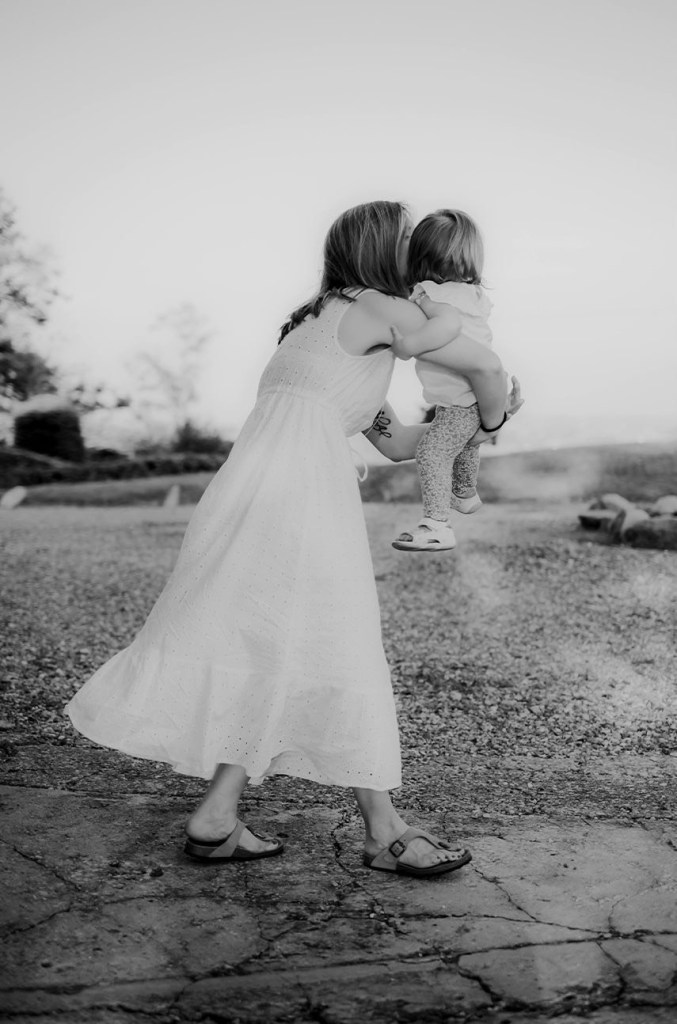
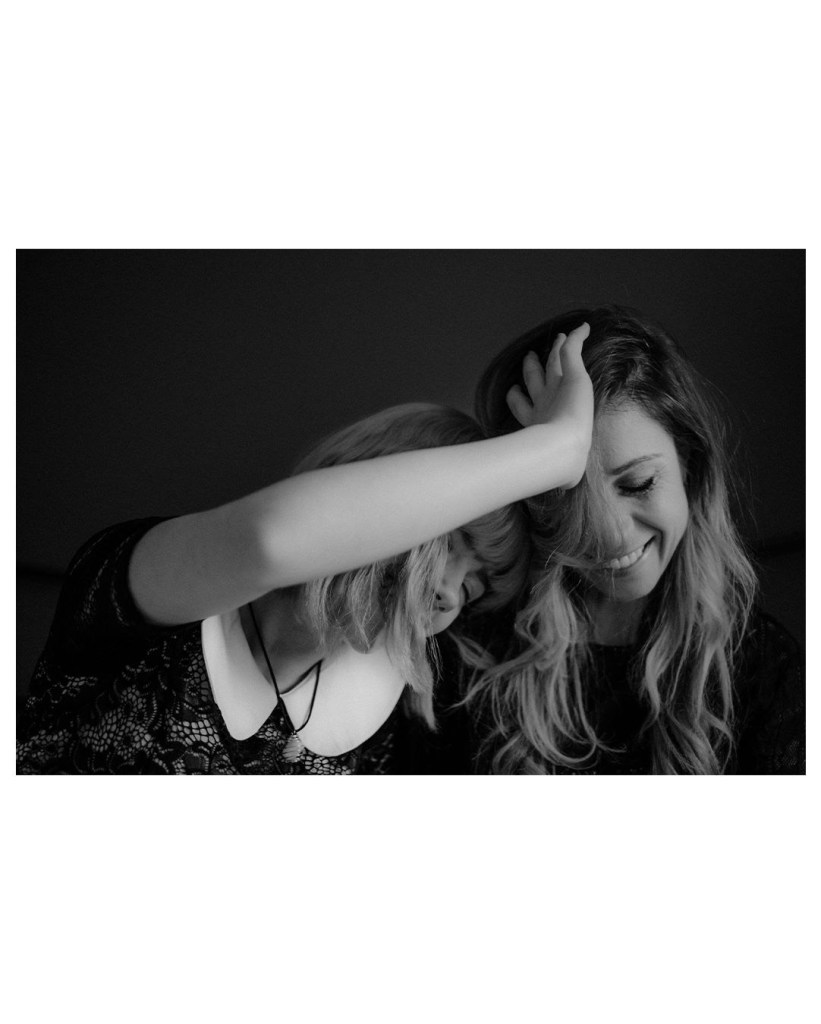
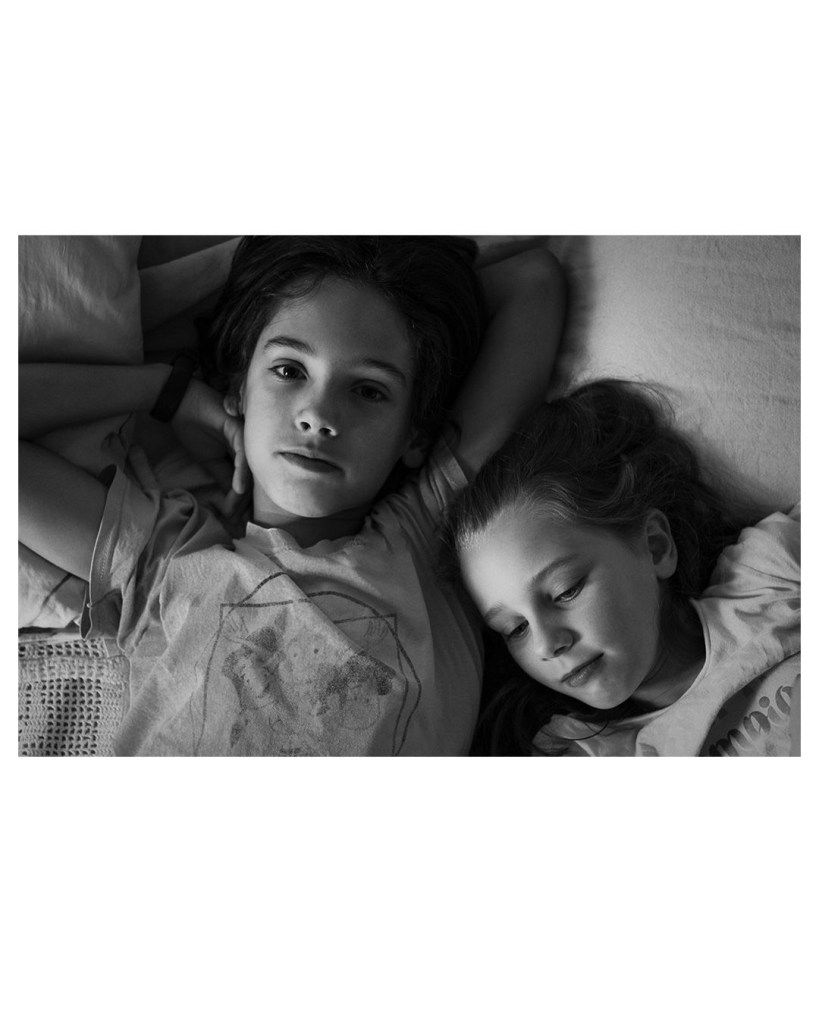
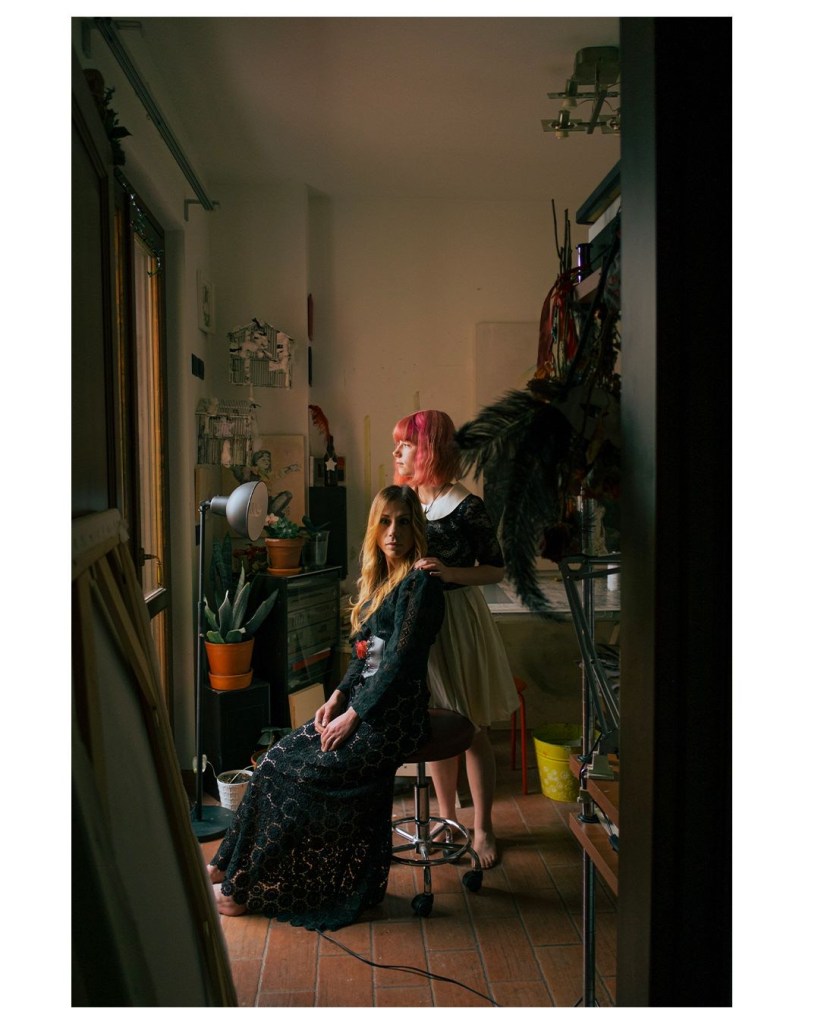
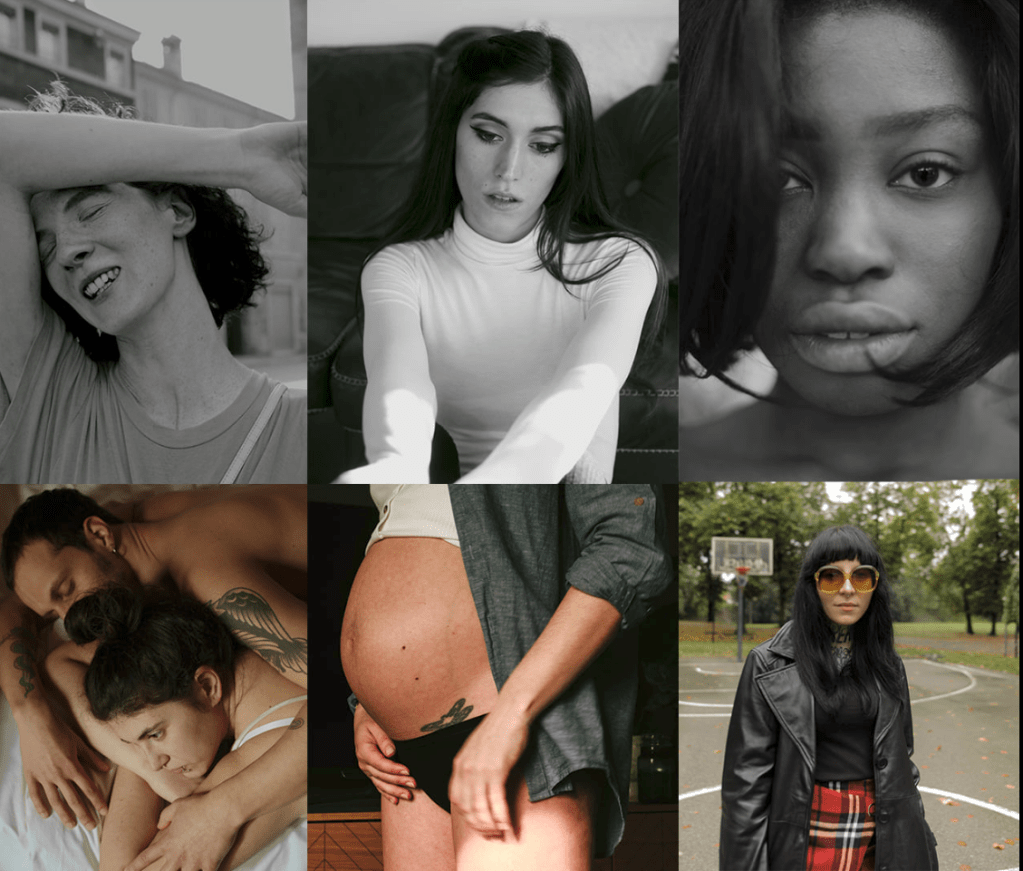
Mi piacciono gli sguardi intimi, quei gesti delicati e quei momenti che durano una frazione di secondo ma che racchiudono secoli di sguardi e di gesti raccontanti nella storia dell’arte.
5) Che cosa ricerchi in una fotografia, che cosa ti colpisce in una fotografia?
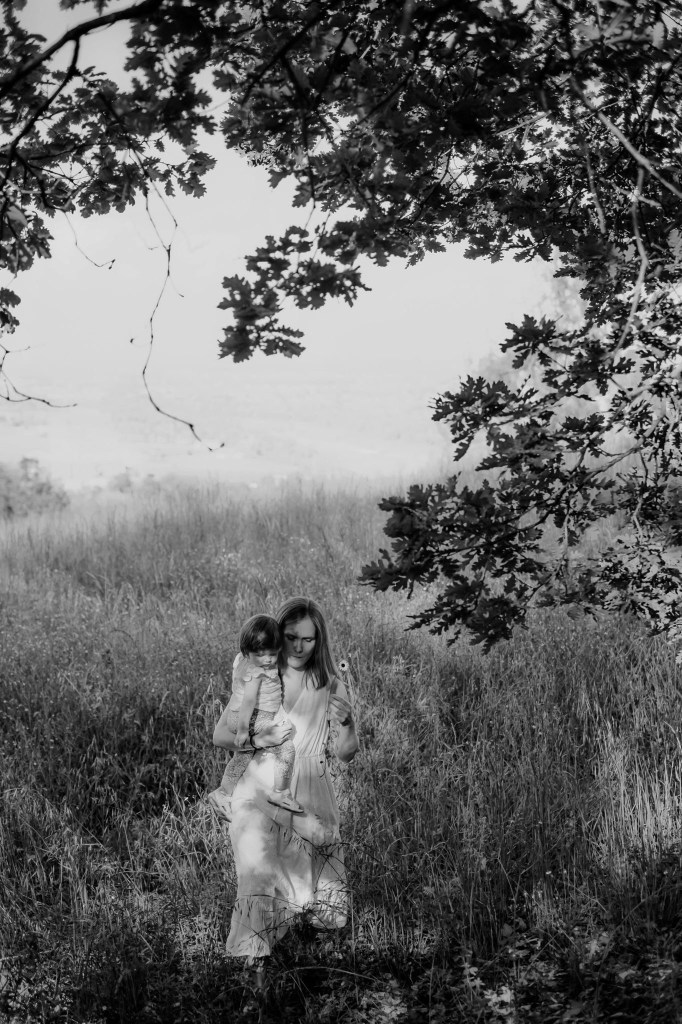
Mi colpiscono le fotografie che comunicano. Le immagini che parlano sottovoce o a squarciagola. Mi piace quando una immagine mi apre lo sguardo e mi conduce altrove, lontano. Questo è quanto ricerco nella mia fotografia: l’immagine è solo un punto di partenza da cui parte la fitta rete del processo creativo e immaginativo.
6) Che cosa ti motiva ad avanzare nel tuo percorso artistico?
Credo sia la voglia di migliorare, la fame di conoscenza, la necessità di imparare e il bisogno di superarsi; alla fine non è altro che la “ricerca” ciò che fa sentire vivo un artista e lo spinge ad andare avanti.
7) Che cosa è difficile nell’organizzare uno shoot?
Sono molto metodica nell’organizzare un servizio, mi piace partire con una scaletta e delle idee chiare, anche se quello che ho imparato negli anni è che durante uno shooting tutto può succedere. Penso quindi che la bravura di un fotografo (e la sfida più grande in questi casi) sia quella di riuscire ad adeguarsi ad ogni circostanza cogliendo il meglio e facendo propria ogni situazione.
8) Quali fotografi o artisti ti ispirano?
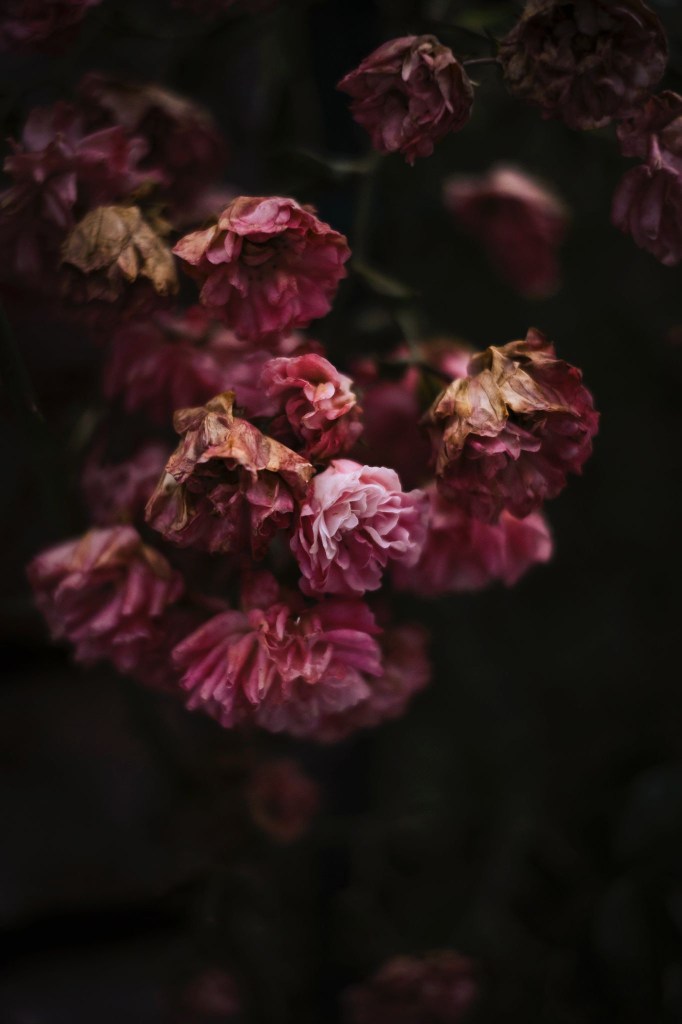
Ad essere sincera trovo difficile fare dei nomi, sarebbero troppi.. Credo, con gli anni di analisi e studi artistici, di avere immagazzinato nella memoria profonda una grande quantità di raffigurazioni, dettagli, colori e costruzioni di immagini a cui il mio subconscio va continuamente ad attingere e a rielaborare personalmente a seconda delle diverse suggestioni.
Il mio sguardo è debitrice alla storia dell’arte e alla storia della fotografia, dai maestri del passato ai grandi e piccoli artisti contemporanei.
9) Che cosa consiglieresti a una persona che sta iniziando a muovere i primi passi nel mondo della fotografia (come fotografo freelance)?
È il consiglio che do a me stessa: non avere paura di mettersi in gioco, sbagliare e imparare dai propri errori.
Essere una spugna di nozioni e di informazioni, interessarsi e apprendere il più possibile dalla contemporaneità e, non meno importante, tirare fuori senza timore la propria unicità.
EN version of the interview
- Martina, would you please introduce yourself and tell us about your artistic background & practice?
I am a visual artist. I was born in Parma, where I grew up. I obtained my A Levels at Liceo Artistico Paolo Toschi, then I graduated at Accademia of Belle Arti in Bologna. Since my childhood I developed a strong connection with drawing and painting. My interest in the history of art and my artistic research led me to express myself through different forms of media over the years, from graphite to photography. This last artistic form allowed me to capture intimate images and to describe forcefully and urgently everyday’s elusive poetic moments.
2) Do you prefer photography or painting or both equally?
Every feeling needs to be described through the use of the most appropriate instrument. Drawing & photography provide both useful ways of expression and communication. They are different disciplines that ultimately express the same language and can equally be considered a form of development. As an artist and a woman, I question myself all the time. I feel the need to continually improve myself and my work. On the one hand there is a need to express myself while on the other my personal journey has pushed me to experiment with different forms of media.
3) When and how did you approach photography?
During my years of studies a compact Nikon camera was the instrument that helped me to visualise and prepare in my mind for my paintings. Throughout the years, after the birth of my kids, photography became more and more a permanent presence in my life: I enjoyed it as a tool that would eventually allow me “to stop” the inexorable passage of time. With my Fuji XPro1 I learnt to observe and capture daily moments in their sweetness as I know that they will never return. Photography to me means to see “poetry in ordinary reality”. This is what I am looking for during my shoots.
4) Who or what do you like to photograph most?
I love to capture intimate feelings, delicate actions, moments that can last a fraction of a second. These fragments of life keep in themselves centuries of glances and unique gestures as they can also be admired in the History of Art.
5) What makes you fall in love with a picture? What grabs you the most?
Photography is communication, therefore I love pictures that are expressive. I cherish images that speak softly or loudly. I like it when an image opens my mind and leads me elsewhere, far away. This is what I am striving for in my artistic journey: the image is the starting point where the dense network of the creative and imaginative process begins.
6) What drives you to push your limits?
I would say it is, above all, the desire to improve myself and the “hunger” to reach a broader knowledge, the need to learn more and to better develop my skills. At the end of the day, I believe it is the crave for a search that makes an artist feel alive and drives him forward.
7) What do you find challenging in the organisation of a shoot?
I am very methodical in organising a shoot. I tend to approach it, knowing already what the project is about and having a clear idea in my mind, even although what I have learnt over the years is that anything can happen during a shoot! The golden skill for a photographer (and the biggest challenge in these cases) is to be able to adapt quickly to every circumstance by capturing the best moments and handling every situation in a personal way.
8) Which photographers or artists inspire you?
Honestly it is difficult to give names, there would be too many of them. Throughout many years of artistic analysis and studies, I have observed and stored in my memory a vast quantity of depictions, details, colors and the construction of images. My subconscious is constantly looking back at them and evaluating them, according to my own personal taste. I have a massive debt towards the History of Art and of Photography generally, towards the masters of the past and all contemporary artists.
9) What advises would you give to someone who is just getting introduced into the world of photography as a freelance photographer?
The same piece of advice that I give to myself: don’t be afraid to get in the game and to take a challenge, make mistakes and learn from them. Be a sponge of notions and information, take an interest in and learn as much as possible from the contemporary world and, no less important, fearlessly bring out your own uniqueness.



 Elena Arvasi Portrait Photographer